
WHITES TREE FROG CARE SHEET
Dumpy Frog, Litoria caerulea
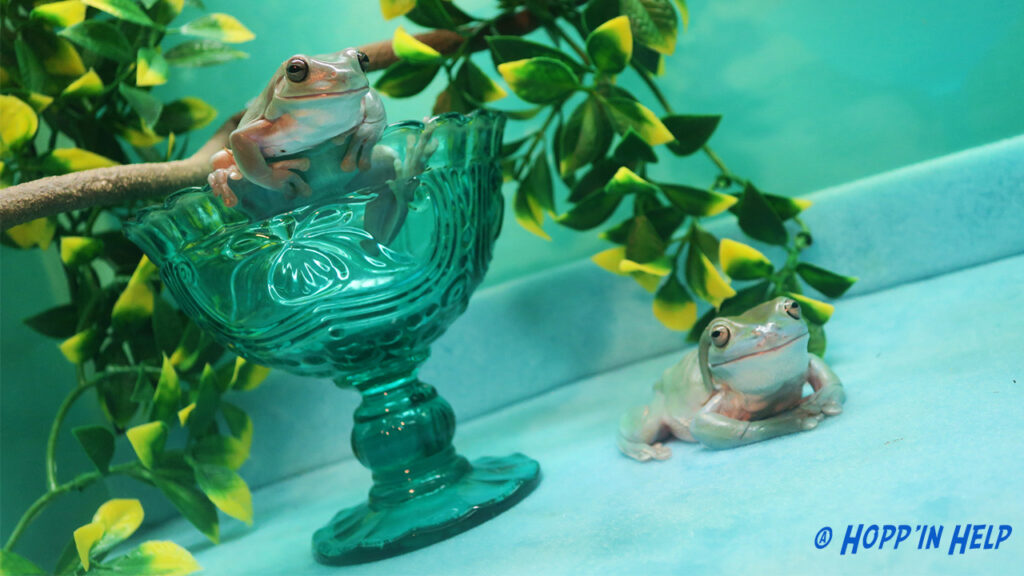
PERSONAL EXPERIENCE: Whites Tree Frogs are a joy of a species that will certainly always keep you smiling. With adorable faces, big personalities, and an even bigger appetite, what isn’t there to love! With their voracious appetite, they require a dedicated cleaning routine. They also tend to confuse your fingers for a snack!
CAPTIVITY DIFFICULTY: Intermediate
LIFE SPAN: 10-15 years
ACTIVITY: Whites Tree Frogs are nocturnal and arboreal. Spending their time in foliage off the ground with activity peaking in the night. During the day, Whites Tree Frogs spend their time sleeping in crevices of their enclosure. At nightfall they will hunt, look for a mate, and soak in their water dish. In addition to their mating call, these frogs tend to be relatively noisy. Jumping -not always gracefully- around their enclosure and general mischief. These frogs are highly social and should be kept in pairs at minimum.
My frog spends a lot of time on the bottom of the enclosure, is that normal? Your Whites Tree Frog spending most of their time on the bottom of the enclosure is a sign of illness. Some larger frogs sleep near the bottom or on the bottom because their weight makes staying on the glass difficult. I suggest adding a horizontal suspended ledge of sorts to the higher areas of the enclosure to accommodate your frog. Examples include; Mushroom ledge by Zoo Med, Vertical Décor Rock Cave by Zilla, and Frog Soap Dish by AliExpress. If your frog still spends most of the time on the bottom, it is time to see an exotic vet.
HANDLING YOUR FROG: Whites Tree Frogs are very friendly and enjoy climbing all over you! It is important to interact with them but it also equally important to ensure their skin does not become irritated. The natural oils humans produce on their skin in large amounts can harm your frog. Holding for 15 minutes twice or so a week will not harm your frog. But keeping your frog from its enclosure your hands for longer can irritate their skin. Some people prefer to always handle with gloves, others only handle with gloves when they need to handle for long periods of time or have an irritant on their hands. Irritants include lotion, soap, cleaning supplies, oils, etc. If you cleaned your car today or got your nails done, wear gloves while handling your frog because those chemicals seep in.
Also, be sure your frog still has the proper requirements out of its enclosure. From temperature to humidity. Many Whites Tree Frogs enjoy looking out the window. Be sure the glass is warm enough for them and keep their skin moist. I suggest getting a platform that suction cups to the glass so you can mist the frog while they enjoy looking out the window!
ENCLOSURE: Whites Tree Frogs require a lot of vertical space to jump and explore. I personally suggest Exo Terra’s line of front opening terrariums. While more expensive, it is worth the easy accessibly. For substrate, I suggest mainly frog foam, but paper towels may be used. Paper towels can be accidentally consumed. Whites Tree Frogs are also prone to bacterial infection and having a substrate that is easy to change/clean helps prevent these greatly (along with proper humidity). I personally use Frog Foam by Josh’s Frogs. This is an amazing choice for Whites Tree Frogs as it is easy to clean, holds an adequate amount of humidity, and can not be accidentally consumed. Loose substrates like coconut fiber core tend to end up in your frog’s mouth often. This can lead to complications down the road.
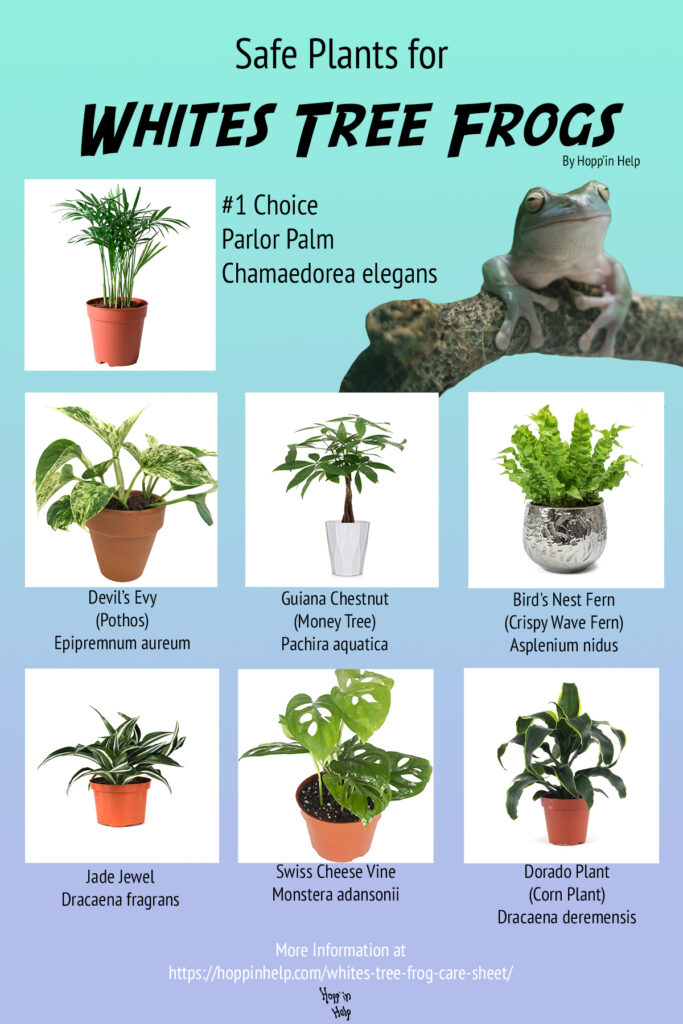
Whites Tree Frogs spend their time in the treetops in their native habitat. You must mimic that environment in their enclosure. Vines, leaf vines, and live plants give your frog plenty of places to jump on and hide in. Click the button below to see my favorite type of vine to use. It is very easy to clean, extremely durable, and includes very nice suction cups and end caps to prevent the metal insides from poking out. When decorating, ensure there are multiple levels of areas for your frog to hide or rest. I suggest adding a horizontal suspended ledge of sorts. Examples include; Mushroom ledge by Zoo Med, Vertical Décor Rock Cave by Zilla, and Frog Soap Dish by AliExpress. Frogs tend to rest on these platforms.
A water bowl is required. The bowl should be as wide as double your frog and deep enough that their whole body, besides their face, can be submerged. Freshwater must always be available. This may mean changing the water once to twice daily. If using tap water, water conditioner must be used. This removes harmful chemicals and makes the water safe for your amphibian. Directions vary so be sure to read the label before using. Spray you frogs at least twice daily or however many times it requires to keep up the humidity to a proper level.
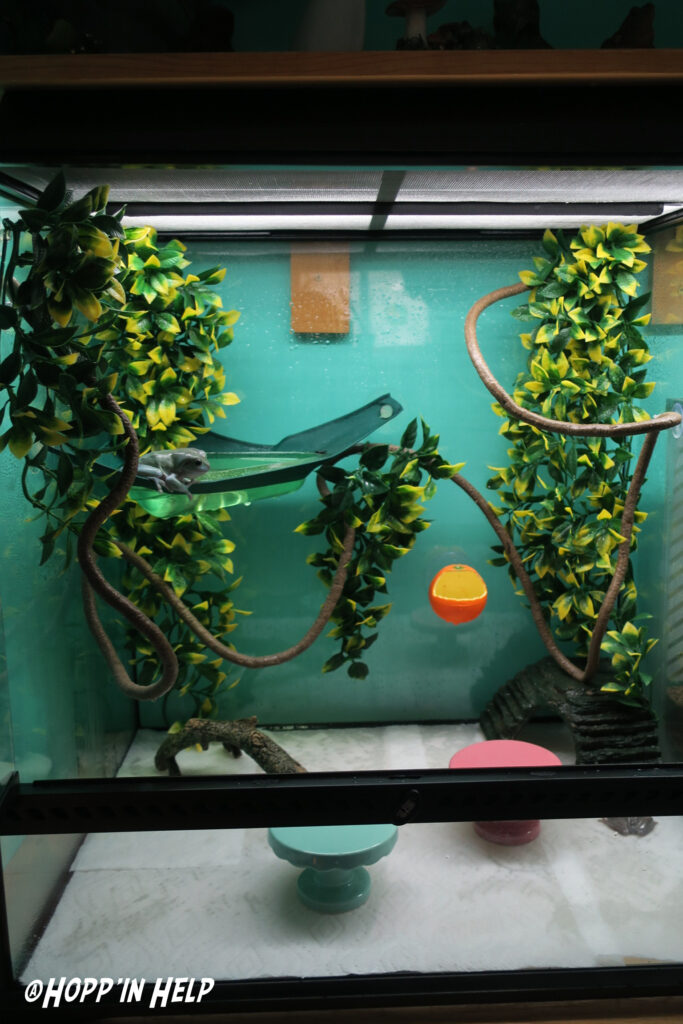
SIZE OF ENCLOSURE: For two to four Whites Tree Frogs, an Exo Terra Medium Tall is suggested. 24” x 18” x 24” (60 x 45 x 60cm). For more frogs, expand taller! Vertical height is key for Whites Tree Frogs.
HUMIDITY: 50% with spikes around 70% when misting in the morning and evening. Whites Tree Frogs are prone to bacterial infections if they are kept at too high humidity.
TEMPERATURE: Daytime temperatures should be 75 to 85 degrees Fahrenheit or 24 to 29 degrees Celsius.
Nighttime temperatures should never drop below 70 degrees Fahrenheit or 21 degrees Celsius.
LIGHTING: Whites Tree Frogs are primarily nocturnal. Despite this, visible light must be provided for 12 hours daily to maintain your frogs natural circadian rhythm. 12-13 hour light cycles mimic summer conditions and can prevent brumation. Shorter light cycles of 8-10 hours mimic winter months which can result in symptoms like hunger strikes. A full spectrum grow light is best to sustain plant growth within your enclosure.
A heat lamp is never necessary unless temperatures drop below 65° F. A low wattage heat emitter set on a timer may be used in winter months. Unnecessary heat can result in drying of the enclosure, which may be fatal to amphibians.
UVB lighting is an essential aspect to the wellbeing of certain captive reptiles and amphibians. However, the quantity of which each species requires has not been heavily researched. Exposure to UVB allows for the synthesis of vitamin D3 within their skin. An essential micronutrient needed to metabolize calcium for healthy bone development, muscle function, immune function, and overall growth. Vitamin D may also be obtained through diet. It is dependent on the species whether diet supplementation of D3 can sustain proper vitamin D values. Too great of UVB exposure can have negative effects including but not limited to ocular damage and cancer. There is currently no research that specifies whether Whites Tree Frogs benefit from UVB lighting more than diet supplementation. Due to this lack of information, a safer route of providing your toad with Vitamin D would be through the diet. Continue reading to the “supplement” section for more important information on calcium and vitamin D3.
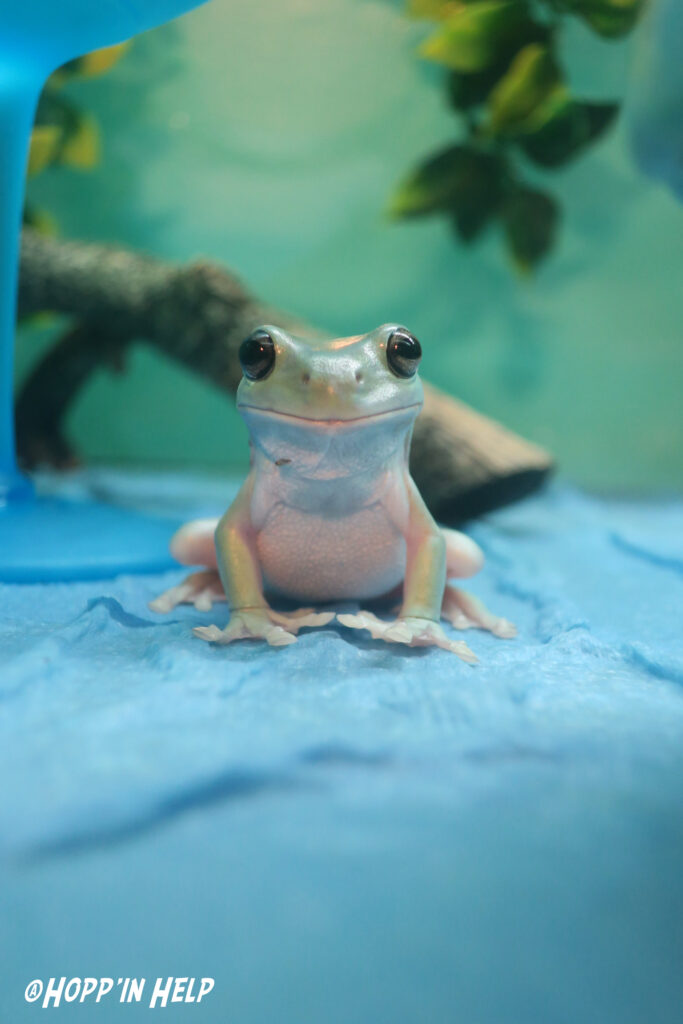
FEEDING: Whites Tree Frogs are primarily insectivores but are opportunistic, voracious eaters as they grow to adulthood. Mature frogs may consume small mammals including pinkies and smaller amphibians. This is an important reason to only house frogs of similar sizes together. Juvenile to fully mature frogs require a diet consisting primarily of crickets or roaches. These insects are high in protein and low in fat. Horn worms may be provided occasionally as a snack, but do not provide much nutrition as they are ~90% water. Avoid mealworms and super worms as their hard exoskeleton made of chitin is difficult for amphibians to digest and they are higher in fat. Wax worms are also a poor choice due to their high fat percentage.
Juvenile frogs should be fed daily. To determine what size of insect you should provide, an easy trick is to provide insects their fit between the frog’s eyes. As your frog’s growing slows, a feeding schedule every other day or 2-3 times weekly. The amount provided per feeding varies depending on each frog’s needs. For growing frogs, placing them out of their enclosure into a separate bin and allowing them to eat as many insects as wanted for 10 minutes is a good method. As frog’s mature, adjust amount fed based on your frog’s body condition. Obesity is common in Whites Tree Frogs, be sure to not over feed.
SUPPLEMENTS: A vital aspect of maintaining your amphibian’s health in captivity is supplementing their diet with powdered vitamins and minerals. Meeting proper habitat requirements alone will not provide essential nutrients for them to thrive.
Powdered supplements should be dusted onto your amphibian’s meal at nearly every feeding. Calcium is an important nutrient amphibians receive primarily from supplementation. Proper calcium levels allow for healthy bone development, muscle, immune, and nerve function. Without proper calcium supplementation, frogs can develop nutritional secondary hyperparathyroidism (NSHP) or more commonly known as metabolic bone disease (MBD). NSHP is the reason for the clinical manifestation that is MBD commonly seen in captive reptiles and amphibians. Here the parathyroid glands overcompensate for the lack of calcium, ultimately resulting in bone weakening as the body essentially “steals” calcium from the bones.
Thankfully with a proper diet, NSHP can be avoided altogether. Powdered calcium supplements are commonly sold in two forms, with vitamin D3 and without D3. Vitamin D3 is crucial micronutrient that aids in proper calcium absorption. Amphibians obtain vitamin D3 in two ways, through the diet and through synthesis within their skin from UVB exposure. Since UVB exposure within captivity for amphibians is extremely limited, the safest way to ensure your frog has vitamin D3 is through their diet.
Other important micronutrients include vitamin A. Multivitamins contain these needed nutrients. A recommended supplementation for a frog includes calcium without D3 twice weekly, calcium with D3 once weekly, and multivitamin once every two weeks.
HOW TO SEX: Female Whites Tree Frogs tend to be larger than males and more plump overall. Females will answer with a small chirp if an undesired man mounts her, but females do not produce the loud mating call.
While males tend to be smaller. Males produce a loud “barking” mating call to attract a mate. Their throat will look like a gumball and while calling and so will their belly!
SIZE: The average size for Whites Tree Frogs is 3-4 inches (7.6-10.1cm). Females may grow to be 5 inches (12.7cm)
I AM NEW TO FROGS, ARE THEY GOOD FOR BEGINNERS?
Whites Tree Frogs are not my first pick for beginners, but they are good! I only do not highly suggest them because the of the level of cleaning they require and how common it is for them to become ill. They are easy to care for as long as you have the time, money, and resources to clean daily and go to the exotic vet if need be.
My first suggestion for beginners will forever be Fire Bellied Toads. Click the button below for their care sheet!